Korean Bibimbap
Uitgelicht onder: Internationale Smaken
Korean Bibimbap is a vibrant and hearty dish that combines rice with an array of colorful vegetables, marinated beef, and a fried egg, all topped with spicy gochujang sauce.
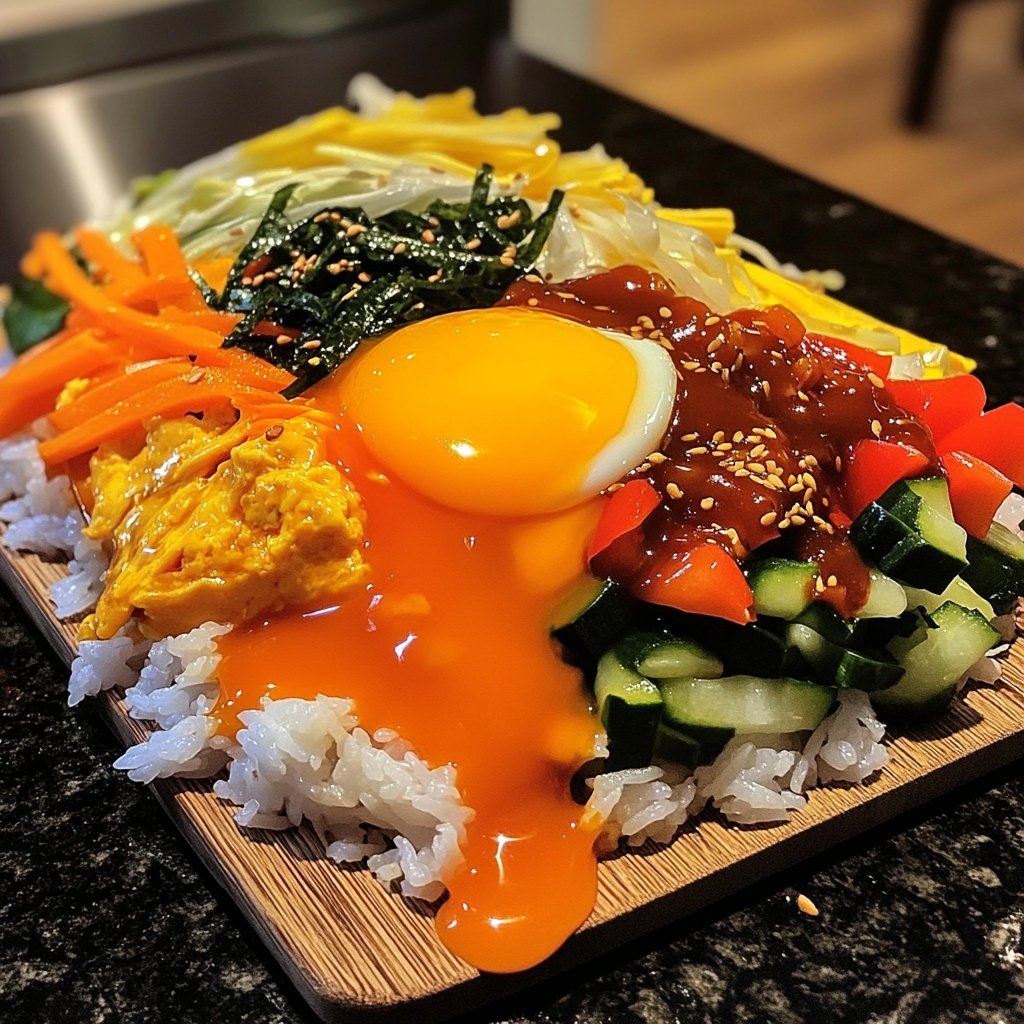
Korean Bibimbap is not just a meal; it's a culinary experience that brings together a variety of flavors and textures in one bowl. Originating from Korea, this dish symbolizes harmony and balance, making it a favorite among many. The vibrant colors of the vegetables make it visually appealing, while the combination of ingredients offers a delightful taste that is both satisfying and nourishing.
Why You'll Love This Recipe
- A colorful and nutritious bowl packed with fresh vegetables
- Customizable with your choice of protein and toppings
- Deliciously spicy with the perfect balance of flavors
The Heart of Bibimbap
Bibimbap, which translates to 'mixed rice,' is a staple of Korean cuisine that beautifully showcases the country's love for fresh ingredients and bold flavors. At its core, this dish is a harmonious blend of rice, vegetables, and protein, making it both satisfying and nutritious. The vibrant colors of the ingredients not only make the dish visually appealing but also highlight the variety of nutrients packed into each bowl.
Traditionally, bibimbap is served in a hot stone bowl, which creates a delightful crispy rice layer at the bottom. This technique not only enhances the texture but also adds an extra layer of flavor as the rice sizzles. However, the essence of bibimbap can be enjoyed in various settings, whether at home or in a restaurant, allowing for a comforting meal any time.
Customizing Your Bowl
One of the best aspects of bibimbap is its versatility. You can easily customize it to suit your dietary preferences or what you have on hand. While the classic version features marinated beef, feel free to substitute with grilled chicken, tofu, or even a mix of mushrooms for a vegetarian option. Each protein brings its own unique flavor profile, allowing you to experiment with different combinations.
The variety of vegetables can also be adjusted based on the season or your personal taste. Try adding radishes, zucchini, or even kimchi for an extra kick. The key is to ensure that the vegetables maintain their individual textures and flavors, creating a delightful contrast when mixed together. Don't hesitate to get creative!
The Magic of Gochujang
Gochujang, the spicy red chili paste at the heart of bibimbap, is what truly elevates this dish. Its unique blend of heat, sweetness, and umami creates a depth of flavor that ties all the ingredients together. When adding gochujang, start with a small amount and adjust to your taste preference; it can range from mildly spicy to fiery depending on your palate.
In addition to being a key ingredient in bibimbap, gochujang is incredibly versatile. Use it as a marinade for meats, a base for stews, or even as a condiment for sandwiches. Its rich flavor and health benefits, including probiotics, make it a staple in many kitchens. Once you discover how to incorporate it into your cooking, you'll find yourself reaching for it time and time again.
Ingrediënten
Gather the following ingredients to make your Korean Bibimbap:
Ingredients
- 2 cups cooked rice (white or brown)
- 1 cup sliced cucumbers
- 1 cup shredded carrots
- 1 cup spinach, blanched
- 1 cup bean sprouts, blanched
- 1 cup shiitake mushrooms, sautéed
- 1 cup marinated beef (bulgogi style)
- 4 fried eggs
- Gochujang (Korean chili paste) to taste
- Sesame oil for drizzling
- Sesame seeds for garnish
- Green onions, chopped for garnish
Make sure to prepare all ingredients ahead of time for a smooth cooking experience.
Bereidingswijze
Follow these steps to create your delicious Korean Bibimbap:
Prepare the Ingredients
Start by cooking your rice according to package instructions. While the rice is cooking, prepare all your vegetables and protein. You can marinate the beef ahead of time to enhance the flavor.
Cook the Vegetables
Sauté the shiitake mushrooms in a little sesame oil until tender. Blanch the spinach and bean sprouts in boiling water for 1-2 minutes and then rinse under cold water to retain color.
Assemble the Bibimbap
In a large bowl, place a serving of rice at the bottom. Arrange the sliced cucumbers, shredded carrots, spinach, bean sprouts, and sautéed mushrooms on top of the rice. Add the marinated beef and a fried egg in the center.
Add Toppings
Drizzle with sesame oil, sprinkle with sesame seeds and chopped green onions. Finally, add gochujang to taste.
Serve
Mix everything together before eating to enjoy the full flavor of the dish!
Enjoy your homemade Korean Bibimbap!
Professionele Tips
- Feel free to customize your Bibimbap with additional proteins like tofu or chicken, and adjust the spice level to your liking.
Serving Suggestions
Bibimbap is best enjoyed fresh, but it can also be a great make-ahead meal. Prepare the ingredients in advance and simply assemble them when you're ready to eat. This makes it an excellent option for busy weeknights or meal prepping for the week ahead. Just remember to keep the gochujang separate until serving to maintain the freshness of the flavors.
Pair your bibimbap with traditional Korean sides like kimchi or pickled radishes for a complete dining experience. These sides not only complement the flavors of the bibimbap but also add an additional layer of nutrition and authenticity to your meal.
Storing and Reheating
If you have leftovers, bibimbap can be stored in an airtight container in the refrigerator for up to three days. However, keep in mind that the texture of the vegetables may change upon reheating. To reheat, use a microwave or a skillet, adding a splash of water to steam the rice and keep it moist.
For best results when reheating, consider separating the protein and vegetables from the rice. This way, you can ensure that everything is heated evenly without overcooking the delicate vegetables. Enjoy your bibimbap warm, and feel free to add a fresh drizzle of sesame oil for an extra flavor boost!
Vragen Over Recepten
→ Can I make Bibimbap vegetarian?
Absolutely! Just replace the beef with tofu or additional vegetables.
→ What can I use instead of gochujang?
You can substitute gochujang with a mix of red pepper flakes and a bit of honey for sweetness.
→ How do I store leftovers?
Store leftovers in an airtight container in the refrigerator for up to 3 days. Reheat before serving.
→ Can I use brown rice instead of white rice?
Yes, brown rice is a great option and adds additional fiber to the dish.
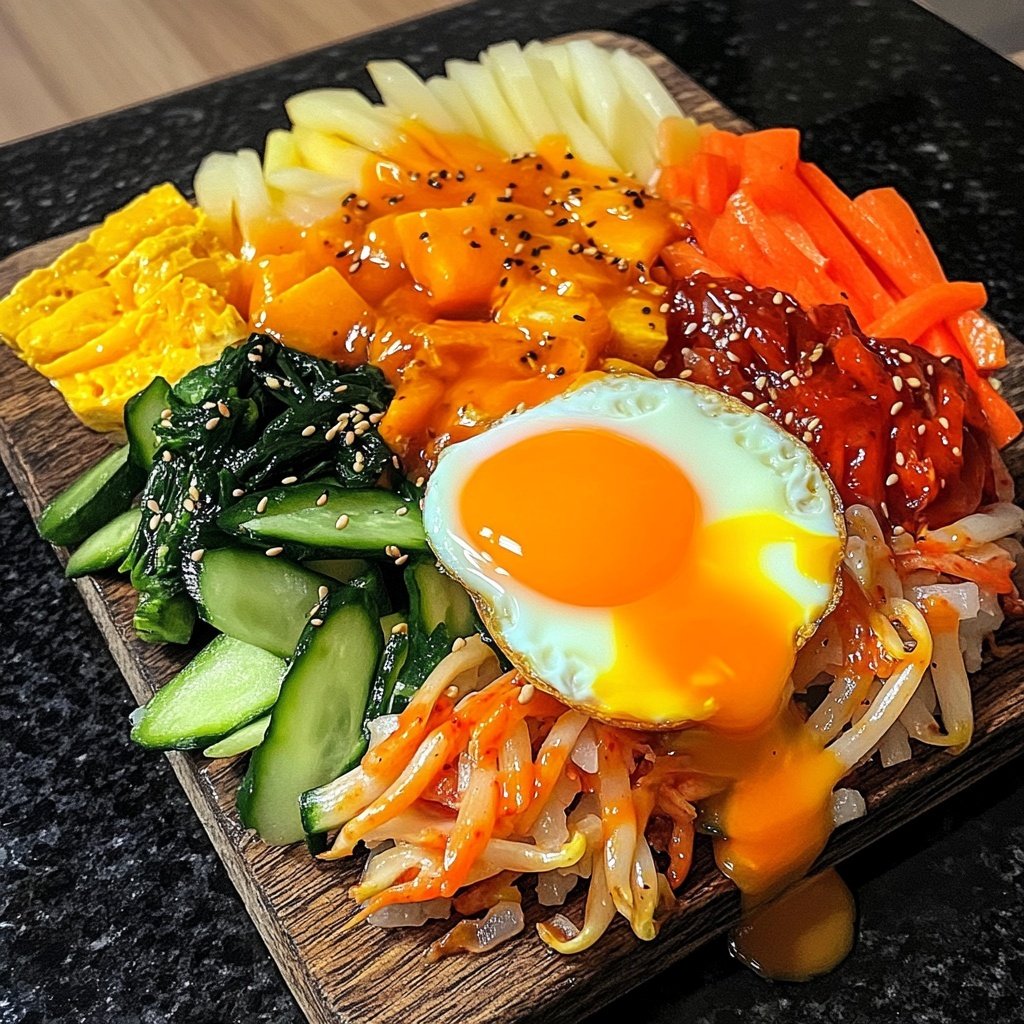
Korean Bibimbap
Gemaakt door: Rosalyn Whitfield
Recepttype: Internationale Smaken
Vaardigheidsniveau: Intermediate
Eindportie: 4 servings
Wat je Nodig Hebt
Ingredients
- 2 cups cooked rice (white or brown)
- 1 cup sliced cucumbers
- 1 cup shredded carrots
- 1 cup spinach, blanched
- 1 cup bean sprouts, blanched
- 1 cup shiitake mushrooms, sautéed
- 1 cup marinated beef (bulgogi style)
- 4 fried eggs
- Gochujang (Korean chili paste) to taste
- Sesame oil for drizzling
- Sesame seeds for garnish
- Green onions, chopped for garnish
Stappen
Start by cooking your rice according to package instructions. While the rice is cooking, prepare all your vegetables and protein. You can marinate the beef ahead of time to enhance the flavor.
Sauté the shiitake mushrooms in a little sesame oil until tender. Blanch the spinach and bean sprouts in boiling water for 1-2 minutes and then rinse under cold water to retain color.
In a large bowl, place a serving of rice at the bottom. Arrange the sliced cucumbers, shredded carrots, spinach, bean sprouts, and sautéed mushrooms on top of the rice. Add the marinated beef and a fried egg in the center.
Drizzle with sesame oil, sprinkle with sesame seeds and chopped green onions. Finally, add gochujang to taste.
Mix everything together before eating to enjoy the full flavor of the dish!
Extra Tips
- Feel free to customize your Bibimbap with additional proteins like tofu or chicken, and adjust the spice level to your liking.
Voedingswaarde (Per Portie)
- Calories: 500 kcal
- Total Fat: 20g
- Saturated Fat: 5g
- Cholesterol: 195mg
- Sodium: 600mg
- Total Carbohydrates: 65g
- Dietary Fiber: 5g
- Sugars: 5g
- Protein: 20g